
01 · Primary
Agentic Systems
Orchestrated multi-agent workflows with state, tools, and human gates.
Applied AI Engineer · Pakistan
Mode / ProductionProduction-grade agentic AI, LLM, RAG, multimodal and machine-learning systems—from model orchestration to APIs, evaluation and deployment.
Agentic AI · LLM Systems · Retrieval-Augmented Generation · Production AI Engineering

TZ Systems Graph
Conceptual production topology
Stateful routing across agents, retrieval, tools and models.
Hover · tap · arrow keys — paths illuminate with the active node
Production signals
Figures tied to specific systems—not vanity company KPIs.
Selected systems
Flagship case studies. Additional systems live in the Engineering Archive.
Engineering capabilities
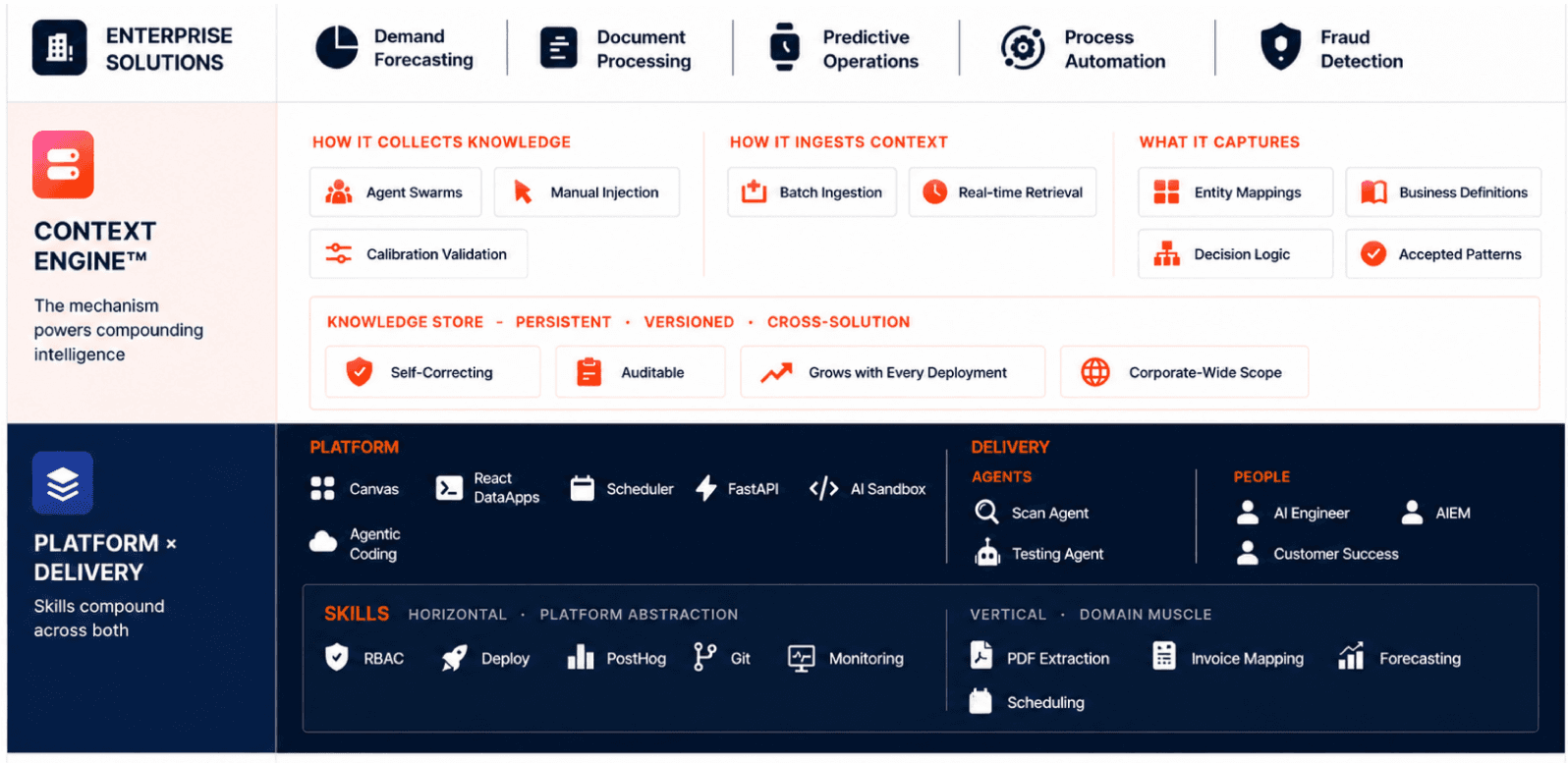
Agentic AI, LLM systems, RAG, and production engineering define the practice. The graph shows how those domains interconnect.
Orchestrated multi-agent workflows with state, tools, and human gates.
Model access, retrieval, evaluation, and observability for production LLM systems.
APIs, data stores, async systems, and cloud deployment for AI products.
Supporting domains: machine learning, computer vision, data engineering, and cloud deployment — used in service of production AI systems.
Agentic Systems
Signature path
Capability alone is not a product. The surrounding system is.
How I build
Six moves from problem framing to production observation.
Business problem / constraints
Architecture / data / tools
Models / agents / retrieval
Quality / latency / reliability
APIs / containers / cloud
Tracing / monitoring / iteration
Engineering trajectory
From foundational applications to production AI systems — increasing architecture responsibility.
APPLICATION
NLP services, fine-tuning, reusable model pipelines.
PRODUCT
Conversational platforms, voice workflows, production APIs.
SYSTEM
Agentic orchestration, semantic retrieval, multimodal platforms.

I care about systems that stay reliable after the demo — clear ownership boundaries, honest evaluation, and problems where retrieval, agents, and infrastructure have to cooperate. Curious by default; deliberate in production.
FAQ
Services, fit, and how collaborations usually start.
I design and build production AI systems—agentic workflows, LLM applications, RAG pipelines, multimodal generation platforms, and the backend, evaluation, and deployment layers that make them reliable. Engagements usually center on architecture, implementation, and shipping—not slide decks.
Production. That means orchestration, retrieval quality, APIs, observability, evaluation, and deployment paths that hold up under real use. I can start from a prototype when needed, but the goal is a system you can operate.
Multi-agent clinical or product workflows, LLM systems that need grounding and evaluation, semantic search and retrieval, multimodal comparison platforms, and clinical or operational data pipelines that must become ML-ready. Hard, system-shaped problems—not one-off notebook models.
Most work starts with clarifying the system boundary, constraints, and success metrics, then moves into architecture and iterative implementation. I collaborate with founders, product teams, and engineering leads—either leading the AI architecture or embedding alongside an existing team.
Yes. I regularly integrate with FastAPI backends, LangGraph-style orchestration, vector retrieval, cloud deployment, and product UIs already in flight. The preference is to strengthen what you have rather than rewrite for its own sake.
Email with context on the problem, timeline, and what “done” looks like. If it’s a fit, we’ll scope the architecture and next steps from there.
Still unsure if it's a fit? Get in touch · talha.10.zain@gmail.com