Generative AI · Creative AI · production
AI Compare Hub
Unified multi-model generative media platform.
Production multimodal generation platform giving users unified access to a large ecosystem of image, video, and audio models—with side-by-side comparison from a single prompt.
Problem
Teams evaluating generative media models face fragmented provider UIs, inconsistent par…
System
A normalized multi-provider orchestration layer with asynchronous job execution, status…
Role
Applied AI / Platform Engineering
Status
production
Outcome
30+ Image models
My role
Applied AI / Platform Engineering
- AI Architecture
- Backend Engineering
- Integration
- Productionization
Period / 2024–Present
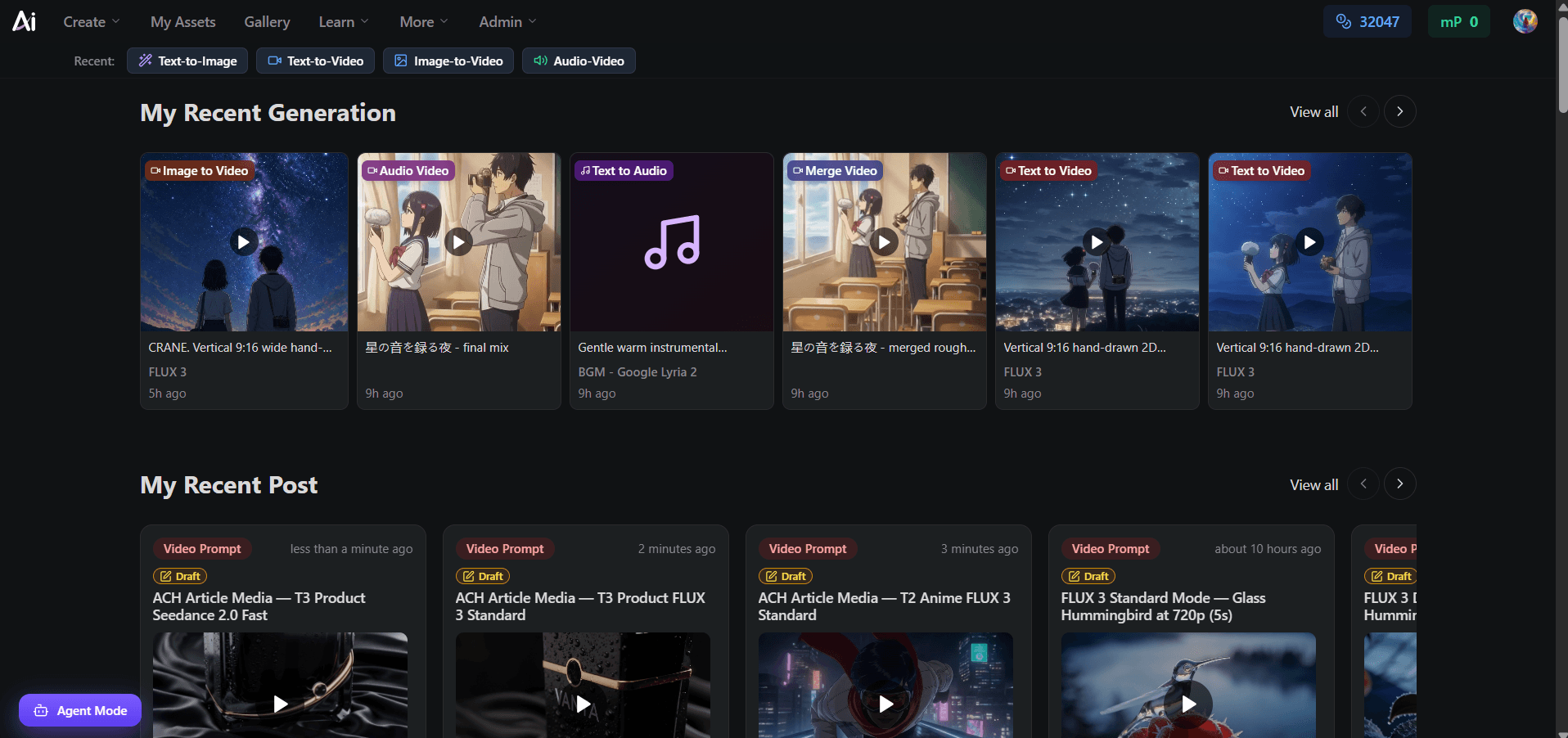
Unified multimodal generation workspace
Plays once · tap to replay
Problem
Teams evaluating generative media models face fragmented provider UIs, inconsistent parameters, and no reliable way to compare outputs under identical prompts.
System
A normalized multi-provider orchestration layer with asynchronous job execution, status tracking, and a shared generation history across staging and production.
Architecture
Prompt intake fans out through a model router into parallel provider executions, then converges through async orchestration into a normalized asset pipeline.
- Prompt → Model Router
- Model Router → Flux
- Model Router → Kling
- Model Router → Veo
- Model Router → OpenAI
- Flux → Async Orchestration
- Kling → Async Orchestration
- Veo → Async Orchestration
Execution path plays once on view · hover a node or tap the canvas to replay
System anatomy
Architecture
Multi-provider fan-out with async job orchestration.
- Model router
- Parallel provider execution
- Normalized result schema
- Generation history
Engineering decisions
Decision
Asynchronous generation architecture
Constraint
Generation latency can exceed a normal HTTP request lifecycle across multimodal providers.
Approach
Multimodal jobs are long-running and provider-specific. Queue-based processing with webhook/polling status tracking keeps the API responsive while preserving model-specific parameters.
Result
Responsive API surface with independently tracked jobs, retries, and status webhooks/polling.
Decision
Normalized result pipeline
Constraint
Providers return incompatible payloads and model-specific parameter shapes.
Approach
A normalization layer enables comparison UI, history, and asset handling without coupling the product to any single vendor.
Result
Side-by-side comparison and shared generation history across the model ecosystem.
Decision
Staging and production workflow parity
Constraint
Adding or updating providers risks regressions if environments diverge.
Approach
Generation history and parameter preservation across environments reduce regression risk when adding or updating models.
Result
Parity between staging and production generation workflows.
Reliability
- Queue-based processingACTIVE
- Webhook and polling status trackingACTIVE
- Retries on provider failuresACTIVE
- Cloud asset handlingACTIVE
- Model-specific parameter preservationACTIVE
Outcome / Results
- Unified access across Flux, Kling, Veo, Seedream/Seedance, Runway, Luma, Ideogram, Stable Diffusion, MiniMax, and OpenAI.
- Side-by-side comparison of up to four models from one prompt.
- Async generation with queues, webhooks/polling, retries, and cloud asset handling across staging and production.
Stack
Product visuals