Data Systems / ML Systems · Healthcare · internal
ECG Intelligence Platform
Vendor-agnostic clinical data unification for ML readiness.
Unified heterogeneous PDF, image, CSV, and waveform inputs into a canonical clinical schema with configurable field mapping—eliminating recurring manual analyst work and enabling analytics/ML pipelines.
Problem
Clinical ECG-related data arrives in incompatible vendor formats. Analysts spend hours…
System
A configurable normalization and field-mapping pipeline that produces a vendor-agnostic…
Role
Data / ML Infrastructure Engineering
Status
internal
Outcome
3–4 hrs/week Manual work eliminated
My role
Data / ML Infrastructure Engineering
- Data Pipelines
- AI Architecture
- Backend Engineering
- Productionization
Period / 2024–2025
Clinical signal fusion into one trusted dataset
Plays once · tap to replay
Problem
Clinical ECG-related data arrives in incompatible vendor formats. Analysts spend hours normalizing fields before analytics or ML training can begin.
System
A configurable normalization and field-mapping pipeline that produces a vendor-agnostic canonical schema suitable for downstream analytics and machine-learning readiness.
Architecture
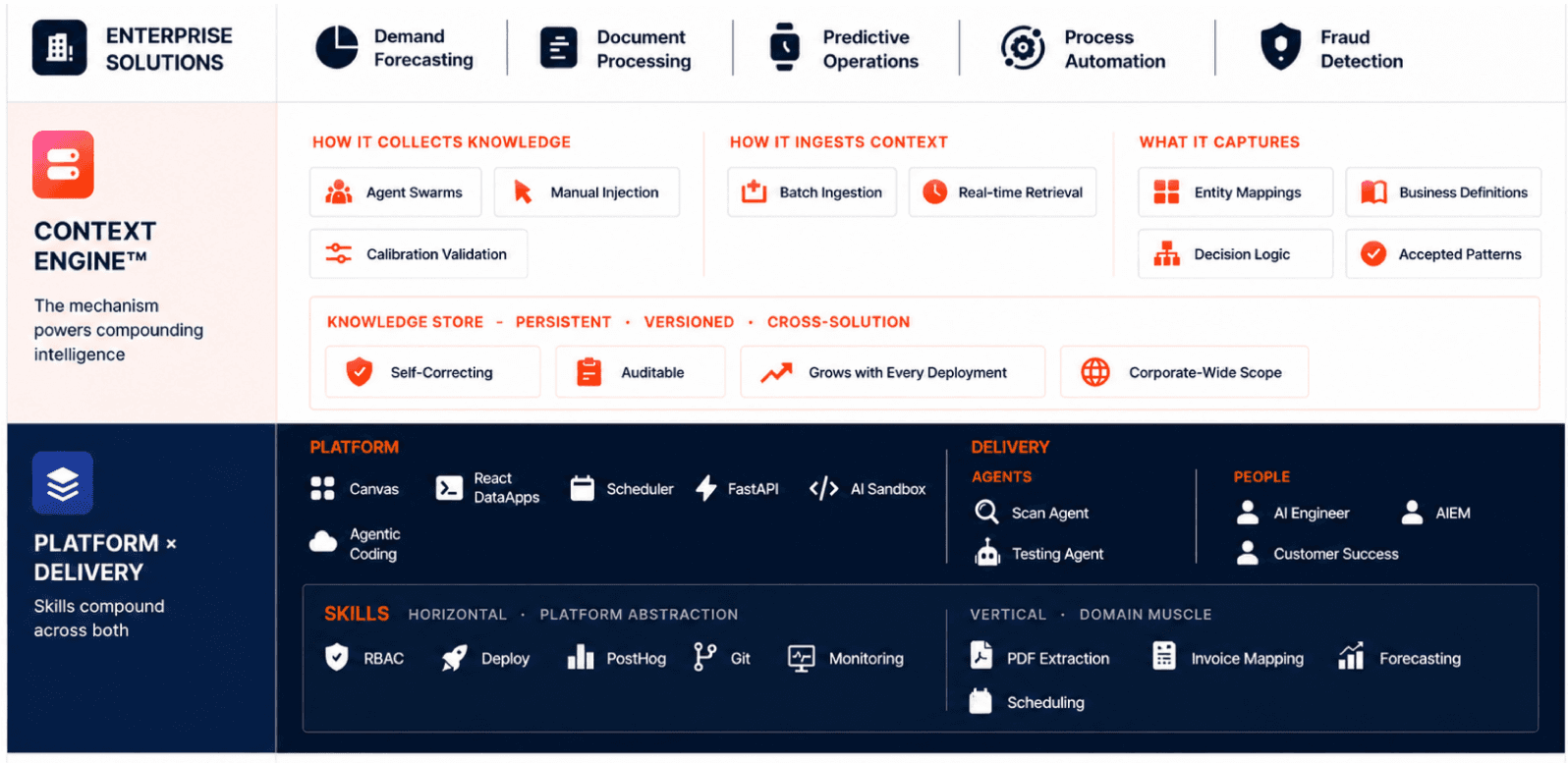
PDF, image, CSV, and waveform sources flow through extraction and normalization into a vendor-agnostic canonical schema consumed by analytics and ML pipelines.
- PDF → Extraction
- Image → Extraction
- CSV → Extraction
- Waveform → Extraction
- Extraction → Normalization
- Normalization → Canonical Schema
- Canonical Schema → Analytics / ML Pipeline
Execution path plays once on view · hover a node or tap the canvas to replay
System anatomy
Architecture
Heterogeneous intake → normalize → canonical → ML readiness.
- Multi-format intake
- Field mapping
- Canonical schema
- Downstream pipelines
Engineering decisions
Decision
Canonical clinical schema
Constraint
Vendor formats diverge across PDF, image, CSV, and waveform inputs.
Approach
A single canonical model decouples analytics/ML from upstream format churn.
Result
One trusted schema for analytics and ML pipelines.
Decision
Configurable field mapping
Constraint
New vendors and fields appear continuously.
Approach
Mapping configuration avoids hard-coded parsers for every source.
Result
Reusable mapping without per-vendor hard-coded parsers.
Decision
ML-ready normalization
Constraint
Analyst spreadsheets do not scale into training inputs.
Approach
The pipeline targets reusable training/analytics inputs, not one-off analyst spreadsheets.
Result
Normalized outputs ready for analytics and ML workloads.
Reliability
- Configurable field mappingACTIVE
- Heterogeneous input handlingACTIVE
- Reusable normalization workflowsACTIVE
Outcome / Results
- Heterogeneous clinical inputs mapped into a canonical schema.
- Reusable normalization pipelines for analytics and ML training.
- Approximately 3–4 hours of recurring manual analyst effort eliminated per week.
Stack
Product visuals